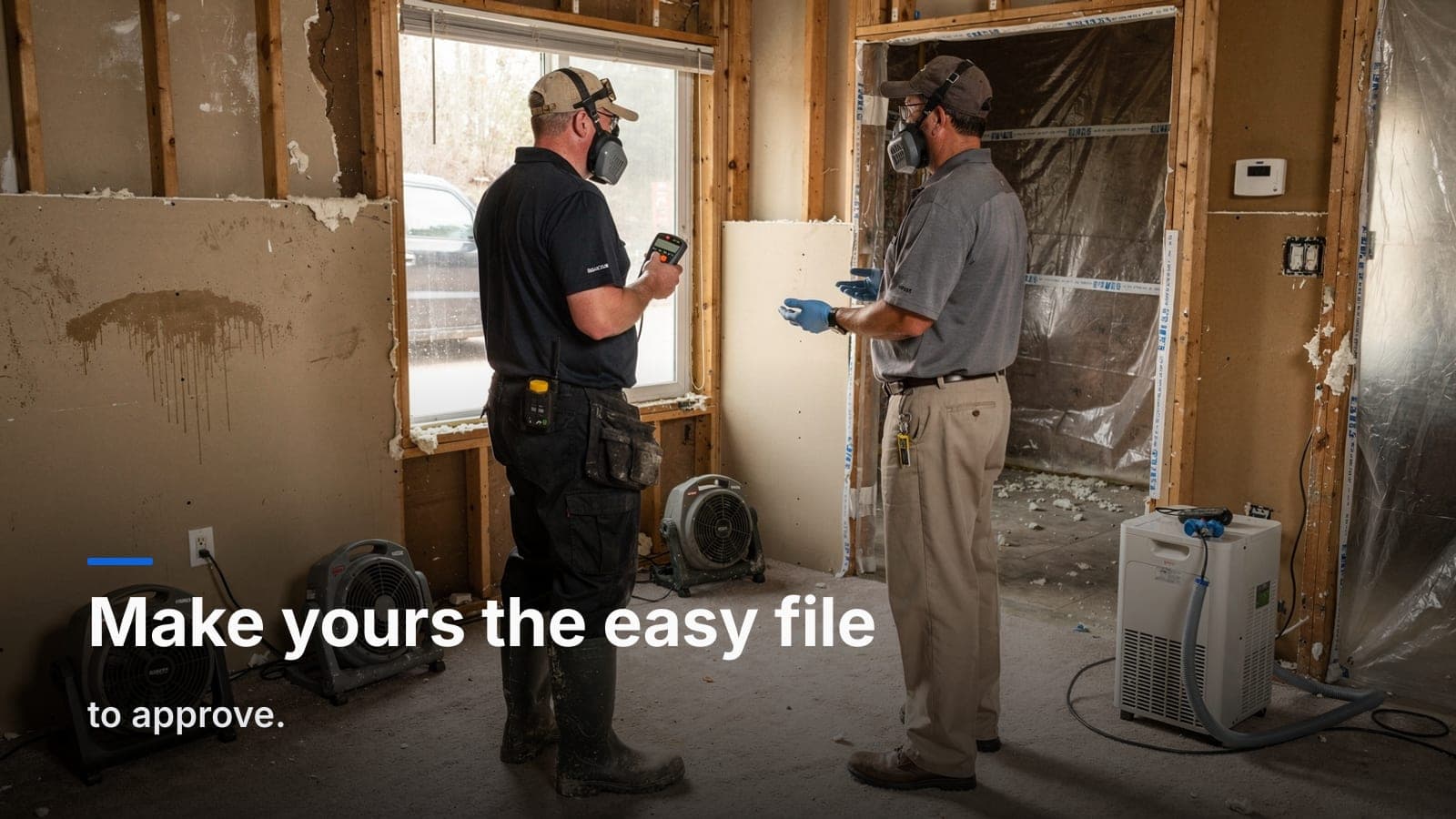
Restorable vs. Non-Restorable: Making the Call on Contents
Quick answers
- What makes an item restorable versus non-restorable? An item is restorable if it can be returned to pre-loss condition for less than replacement cost and without leaving a health or safety problem behind — both conditions have to be true.
- Is a moldy item ever restorable? Visible mold growth into the substrate generally settles the call as non-restorable, since surface cleaning can't guarantee the contamination underneath is gone.
- How do adjusters decide if a contents item is a total loss? They look at whether restoration cost exceeds replacement value, the water category involved, how porous the material is, and how long it was exposed before mitigation started.
- Does water category affect whether contents are restorable? Yes — Category 1 water leaves far more items restorable than Category 2 or 3, since contamination and porosity are central to the restorable/non-restorable test.
- What dispositions are typically used for contents claims? Clean and return, clean and store, restore off-site, non-restorable/dispose, and customer-retained — a fixed, consistent set applied across every job.
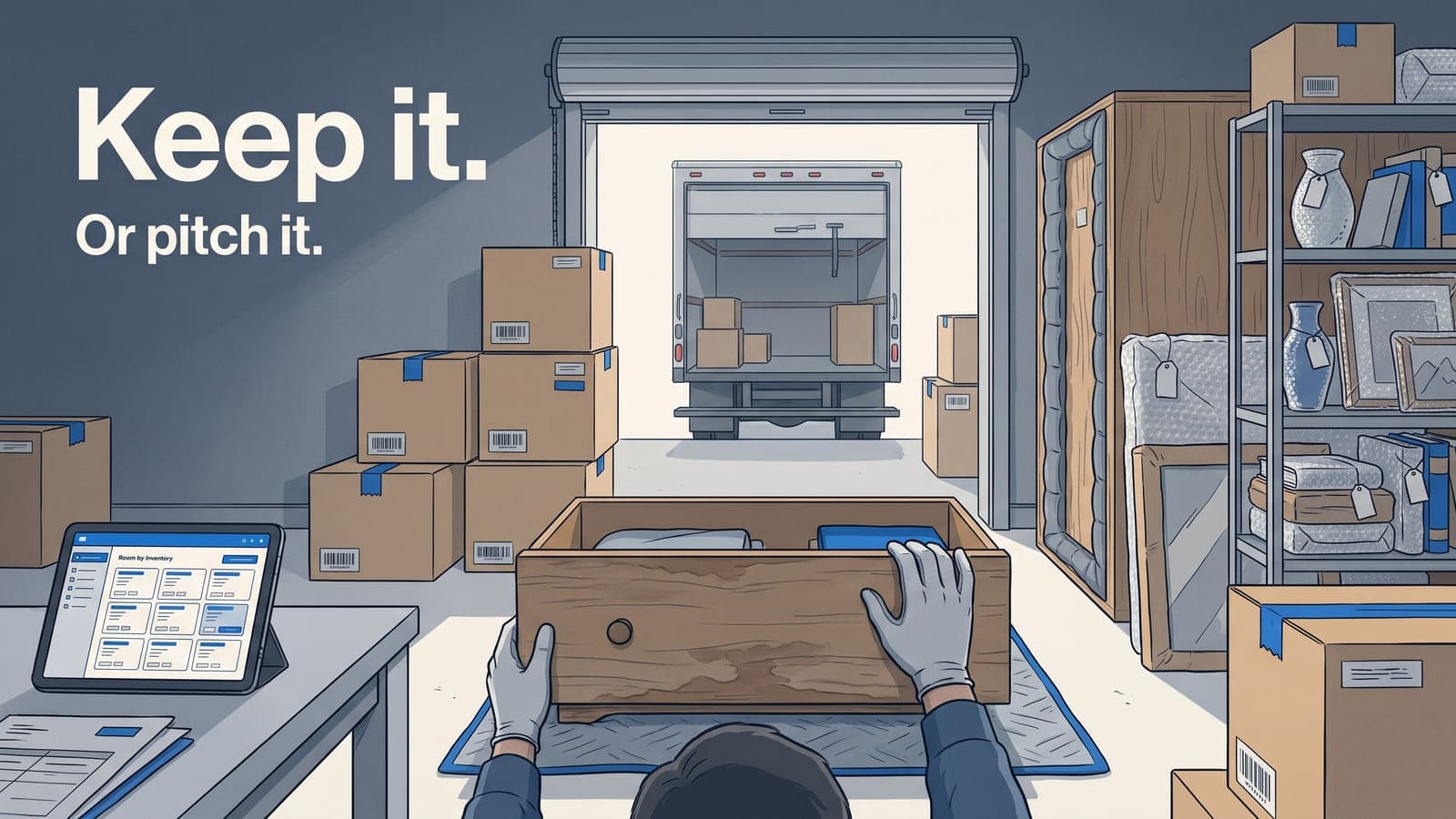
Every pack-out comes down to a stack of decisions made one item at a time. Keep it or pitch it. Clean it or replace it. Restorable or non-restorable. The call itself is usually quick once you've done enough of them. The part that gets crews in trouble is the documentation. An adjuster looking at your line items six weeks later doesn't see what you saw kneeling in a soggy basement. All they have is what you wrote down.
This is about getting both halves right: making a defensible restorable vs. non-restorable call in the field, and recording the reasoning so it holds up when someone reviews it.
What "restorable" actually means
A restorable item is one you can return to pre-loss condition for less than it costs to replace, without leaving a health or safety problem behind. That's the whole test. Two parts, and both have to be true.
Cost. If cleaning, deodorizing, and any minor repair runs more than the replacement value, the item is non-restorable on economics alone. This is where a lot of crews second-guess themselves on cheap stuff. A $30 pressboard nightstand that took on water is almost never worth the labor to disassemble, dry, and treat. The math says total loss even if the piece looks salvageable.
Condition and safety. Some items you don't restore at any price because you can't make them safe again. Porous materials saturated in Category 3 water. Upholstered furniture with sewage wicking. Mattresses and pillows after a real soak. Food and consumables. Anything with mold growth into the substrate. You can clean the surface all day and still have a contaminated item underneath.
When both tests pass, it's restorable. When either one fails, it's non-restorable and you're documenting a contents total loss.
The factors carriers actually look for
Adjusters aren't trying to catch you. They're trying to see that the disposition matches the loss. When your call lines up with the facts of the claim, it gets approved and you move on. The factors that make that easy:
- Water category. Cat 1, 2, or 3 changes everything about what's salvageable. A Cat 1 supply line break leaves far more restorable than a sewage backup or flood water. Your disposition decisions should track the category, and a reviewer will read them against it.
- Material and porosity. Hard, non-porous goods clean up. Glass, metal, sealed wood, hard plastics — usually restorable. Porous and semi-porous goods that held contaminated water are the ones that go to total loss. Say which it is.
- Length of exposure. A loss caught in hours is a different animal than one that sat over a holiday weekend. Wicking, swelling, and mold colonization are all about time. If exposure was long, that's part of your reasoning.
- Mold and microbial growth. Visible growth, or growth into the substrate, generally settles the call. Note where you saw it.
- Replacement value vs. restoration cost. The economic test, in writing. "Cleaning labor exceeds replacement" is a complete, defensible reason for a low-value item.
- Sentimental or high-value exceptions. Sometimes you restore an item that fails the economic test because it's irreplaceable to the customer, or you total an item that would technically clean because the customer wants it gone. Either way, the customer decision belongs in the record.
Making the call in the field
Work room by room, item by item, and decide as you handle each piece. Don't batch it for later — you'll forget which chair came from where and what shape it was in. If you want a tighter process for the inventory side of this, our room-by-room contents inventory checklist covers how to move through a structure without missing anything.
A simple mental flow that keeps crews consistent:
- Is it safe to restore? Contamination, mold, soaked porous material — if no, it's non-restorable. Stop here.
- Does the math work? Restoration cost under replacement value? If no, non-restorable.
- Any customer exception? Sentimental keep, or customer-requested disposal. Note it.
- Record the disposition and the reason. Every time.
Categories of disposition you'll end up using: clean and return, clean and store, restore (off-site treatment), non-restorable / dispose, and customer-retained. Pick a fixed set and stick to it across every job so your reports actually mean something.
Documenting it so it survives review
Here's the rule that saves you: a disposition without a reason is an opinion, and opinions get pushback. A disposition with a reason is a finding, and findings get approved.
For every non-restorable item, the record should answer three questions:
- What is it? Item, room, quantity.
- Why is it non-restorable? The factor — Cat 3 saturation, mold into substrate, replacement under restoration cost, customer-requested.
- What does it look like? A photo of the actual condition that supports the reason.
That last one does more work than anything you write. A photo of black-flecked upholstery or a swollen, delaminating cabinet makes the total-loss call self-evident. A reviewer who can see the damage rarely argues the disposition. We go deeper on building an inventory that holds up under scrutiny in how to run a pack-out inventory that survives an audit, and the short version is: photograph condition at the moment you handle the item, not afterward from memory.
Where paper falls apart
The reason these calls go sideways isn't bad judgment in the field. It's the handoff. Tech writes dispositions on a clipboard, photos live on three different phones, and by the time someone reconciles it all into an estimate the reasoning has evaporated. Now the line says "non-restorable" with nothing behind it, and the adjuster has a question you can't answer two weeks later.
The fix is recording condition, disposition, and the supporting photo against the item itself, on the spot. That's the whole idea behind the contents and pack-out module in JobWorkflowPro: item-level inventory where each entry carries its room, condition, disposition, and photos together, with customer approvals attached. The AI handles the busywork — auto-naming, descriptions, and item pricing — so the tech spends their attention on the call that matters instead of typing. We wrote up how that pricing piece speeds the back end in AI item pricing for contents claims.
When the disposition and its evidence travel together, review stops being a fight. The reviewer sees the item, the reason, the photo, and the customer's sign-off in one place.
Get the customer on record
The disposition you'll defend hardest is the one the customer disputes after the fact. "I never said to throw that out." A documented approval ends that conversation before it starts. Capture sign-off on disposal decisions — especially on customer-retained and customer-requested-disposal items — and you've protected the crew and the claim at the same time.
The habit that makes it easy
Restorable vs. non-restorable isn't hard once you trust the two tests: can you make it safe, and does the math work. The discipline is recording the reasoning every single time, while you're holding the item, with a photo that backs it up. Do that consistently and your contents total-loss calls stop getting kicked back. Reviewers approve what they can see.
Frequently asked questions
Who makes the final call on restorable versus non-restorable?
The field tech or contents crew makes the initial call using the cost-and-safety test, but the reasoning and photo evidence are what the adjuster actually reviews to approve it.
Can a customer keep an item the crew called non-restorable?
Yes — sentimental or customer-requested exceptions happen in both directions, and the customer's decision should be documented in the record either way.
Does the age of an item affect the restorable decision?
Age feeds into replacement value, which is one side of the economic test — an older, lower-value item is more likely to fail the cost comparison even if it's technically cleanable.
What's the risk of not documenting a non-restorable disposition?
A disposition without a stated reason reads as an opinion and invites pushback; the same call backed by a reason and a photo reads as a finding and tends to get approved.
Do customers need to sign off on disposal of non-restorable items?
Yes — capturing sign-off on disposal, especially for customer-retained or customer-requested-disposal items, protects the crew if the customer disputes the decision later.
If you're handling contents claims with a clipboard and a camera roll, take a look at how JobWorkflowPro's contents module keeps disposition, condition, and approvals on the same record. You can start a free trial and run it on a real job, or email us at sales@jobworkflowpro.com if you want to talk through how your crews work first. No pressure either way — but the next pack-out is a good place to test it.