Water Damage Categories 1, 2, and 3: How Each Changes Your Scope
Quick answers
- What is Category 1 water damage? Category 1 (clean) water originates from a sanitary source such as a broken supply line, tub overflow, or appliance line, with no contaminants present.
- What is Category 2 water damage? Category 2 (gray) water carries significant contamination — enough to cause illness or discomfort on contact — and comes from sources like washing machine or dishwasher discharge, toilet overflow with urine, or a broken sump.
- What is Category 3 water damage? Category 3 (black) water is grossly contaminated, coming from sources like sewage backups, flooding from rivers or streams, or wind-driven rain carrying soil and debris through the building envelope.
- Can Category 1 water turn into Category 2 or 3? Yes — water contamination can degrade over time and with warmth, so clean water sitting in a wall cavity for several days should be treated as a higher category even though it started clean.
- Does water damage category refer to the amount of water or the contamination? Category describes the level of contamination in the water, not the volume — a small contaminated loss and a large clean-water flood are scoped very differently.
If you've run water losses for any length of time, you already know the category isn't just a box you check. It drives everything downstream: what you can save, what gets pulled, what PPE your crew wears, and how hard the adjuster leans on you when the invoice lands. Get the category right and document the reasoning, and the scope mostly defends itself. Get it wrong, or fail to write down why it changed, and you're explaining yourself on a job you already finished.
This is a plain-language walkthrough of the three water damage categories, what each one does to your mitigation scope, and the notes you want in the file before you leave the site.
The three categories, quickly
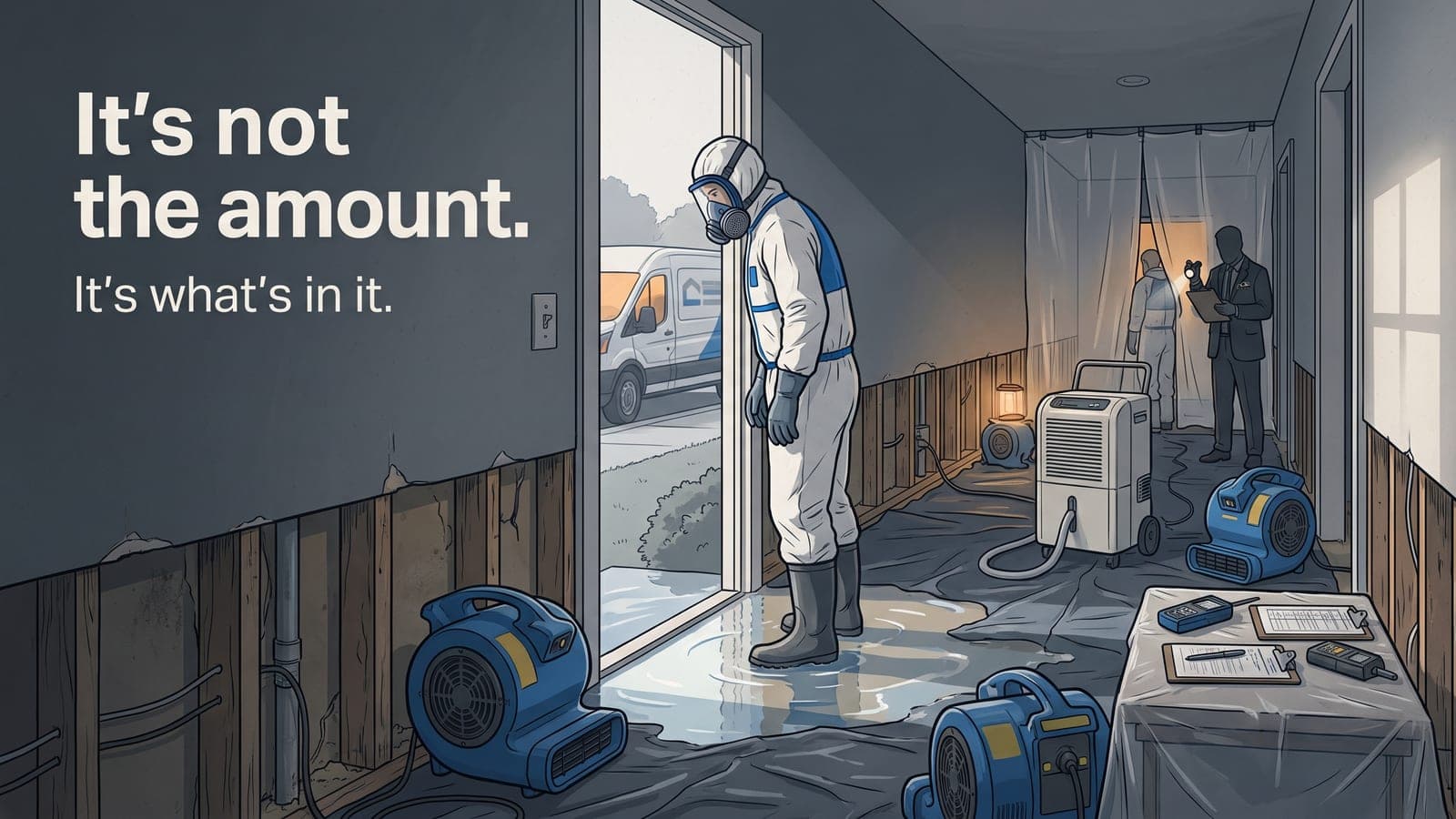
The categories describe the level of contamination in the water, not the amount of water. A slow toilet supply line and a sewer backup can both flood the same bathroom, but they are not the same job. Category is about what's in the water and what it's touched.
- Category 1 — clean water. Originates from a sanitary source. Broken supply lines, tub or sink overflows with no contaminants, appliance lines, melting ice, rainwater before it picks anything up.
- Category 2 — gray water. Significant contamination, enough to cause illness or discomfort if ingested or contacted. Washing machine and dishwasher discharge, toilet overflow with urine but no feces, aquarium water, water from a broken sump.
- Category 3 — black water. Grossly contaminated. Sewage, toilet backflow with feces, flooding from rivers or streams, ground surface water carrying contaminants, and any wind-driven rain that came through the building envelope carrying soil or debris.
Two things trip people up. First, category can degrade with time and temperature. Clean water sitting warm in a wall cavity for three days is no longer Category 1, and you should treat it accordingly. Second, the source matters less than the contact. Clean supply water that runs through an attic full of rodent droppings and insulation before it reaches the ceiling is not arriving clean.
Category 1: clean water, but document anyway
This is your most restorable scenario. Most materials are salvageable if you get to them fast and dry them properly. Drywall can often be dried in place, carpet and pad may be recoverable depending on dwell time, and hardwood has a fighting chance with the right equipment and a real drying plan.
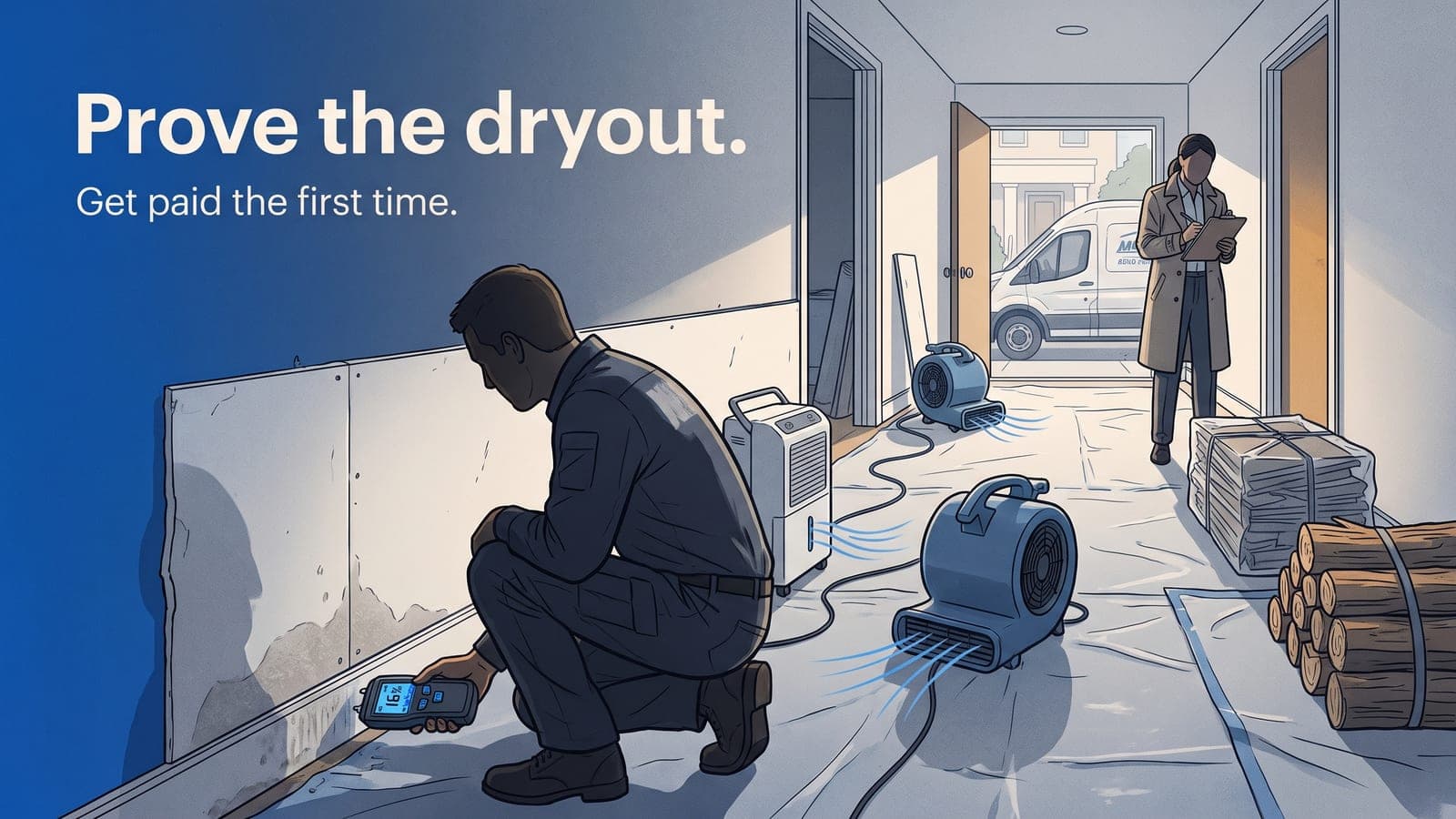
The scope here is mostly about speed and verification. Extract, set up drying, and prove the structure actually dried with daily moisture readings. The trap with Category 1 is complacency. Because it's "just clean water," crews sometimes skip the documentation that justifies the equipment count and the days on site. Then the adjuster asks why you ran air movers for four days and you've got nothing but a memory.
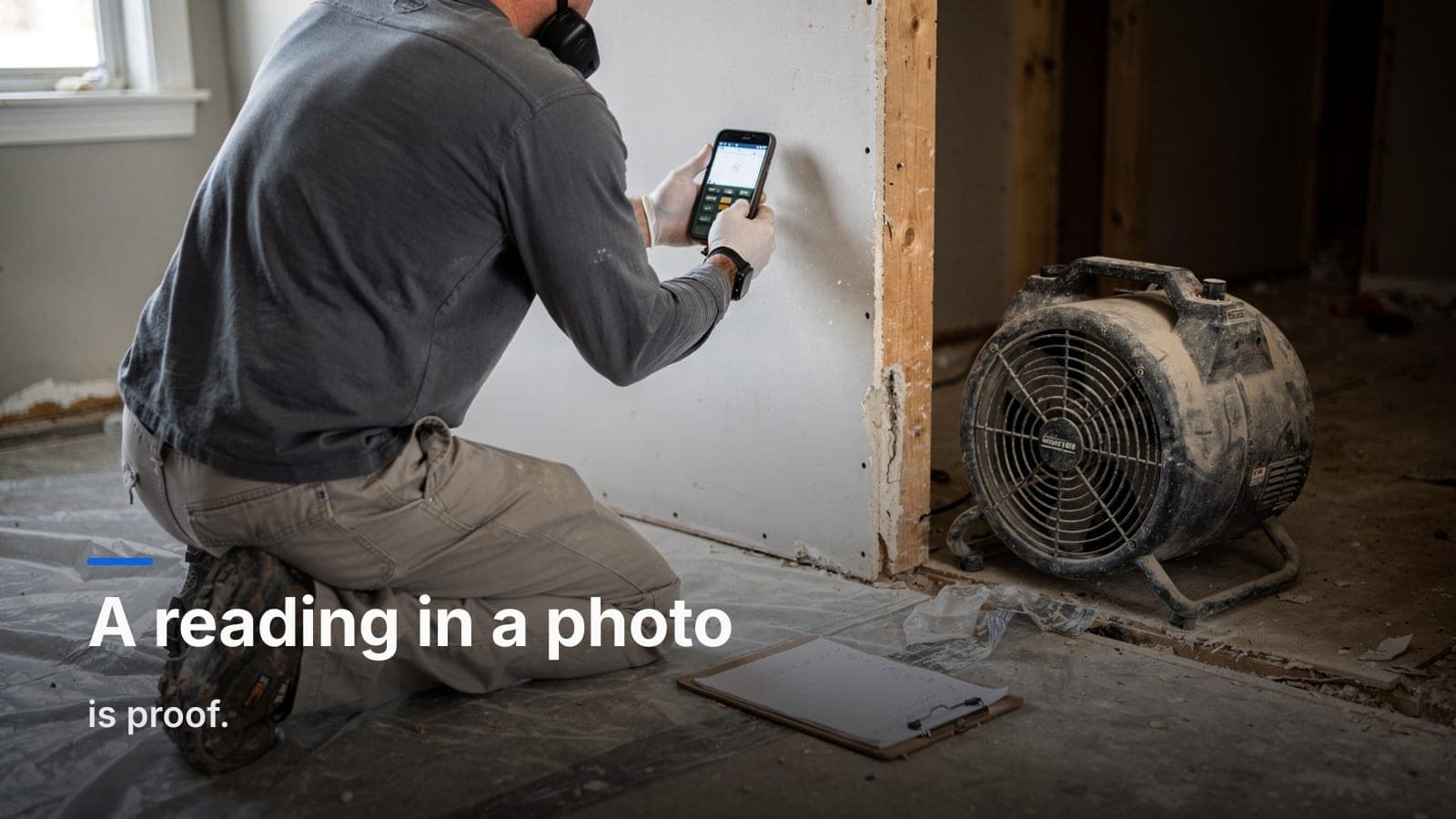
Your file should show source, affected materials, moisture readings over time, and your drying logic. This is where consistent moisture mapping and drying logs carry the whole job. A clean loss with clean documentation is the easiest invoice you'll ever defend.
Category 2: gray water and the judgment calls
Gray water is where the scope starts to fork. You're no longer assuming everything dries in place. Porous materials that absorbed contaminated water get a harder look, and antimicrobial application becomes part of the conversation. Pad under carpet usually goes. Carpet itself depends on the contamination and dwell time. Drywall that wicked gray water may need to come out rather than dry in place.
PPE steps up too. Gloves at minimum, eye protection and respiratory protection depending on the situation. Your crew shouldn't be touching gray water with bare hands and a shrug.
The documentation job in Category 2 is explaining your calls. Why did the pad come out but the carpet stay? Why antimicrobial in this room and not that one? You don't need a dissertation, but you need a defensible note attached to the right rooms and materials. When you're deciding what's worth saving versus tossing, the same logic you use for belongings applies to structure, and our piece on restorable vs. non-restorable contents walks through that decision framework.
The other Category 2 reality: it doesn't stay Category 2 forever. Sitting time and warmth push it toward Category 3. If you got called out late and the water's been stewing, say so in the file and adjust the scope. Note the date and condition you found, not just the date you arrived.
Category 3: black water changes the whole job
Category 3 is a different animal, and your scope reflects it. The working assumption flips. Instead of asking what you can save, you're asking what genuinely has to come out, and the answer is usually most of the porous materials that contacted the water.
What that typically means on the ground:
- Removal over restoration for porous materials. Carpet, pad, affected drywall, insulation, and porous contents that contacted black water generally get removed and disposed of, not cleaned in place.
- Containment and controlled demo. You're keeping contamination from spreading to clean areas, not just drying.
- Full PPE. Respiratory protection, suits, gloves, boot covers. This is not optional, and it's not a place to cut corners to save twenty minutes.
- Cleaning and antimicrobial on salvageable non-porous surfaces before drying begins, not after.
- Disposal that follows the rules. Black water debris isn't regular jobsite trash.
The scope is bigger, the safety stakes are higher, and the documentation has to be airtight because the invoice is bigger too. Photograph the contamination before you touch it. Photograph the source. Document the demo. Note the PPE and containment you set up. A category 3 water job with thin documentation is exactly the kind that gets picked apart in review.
How category drives scope, at a glance
| Cat 1 (Clean) | Cat 2 (Gray) | Cat 3 (Black) | |
|---|---|---|---|
| Source | Sanitary supply, rain | Appliance discharge, urine | Sewage, flood, surface water |
| Porous materials | Often dry in place | Case by case | Generally removed |
| Antimicrobial | Usually not required | Often | Yes |
| PPE | Basic | Gloves, eye/respiratory | Full PPE + containment |
| Documentation focus | Drying verification | Justify removal calls | Contamination + demo proof |
Treat this as a starting point, not a substitute for assessing the actual loss in front of you. Dwell time, building materials, and how the water traveled can all push a job a category in either direction.
Documentation is the part that survives the audit
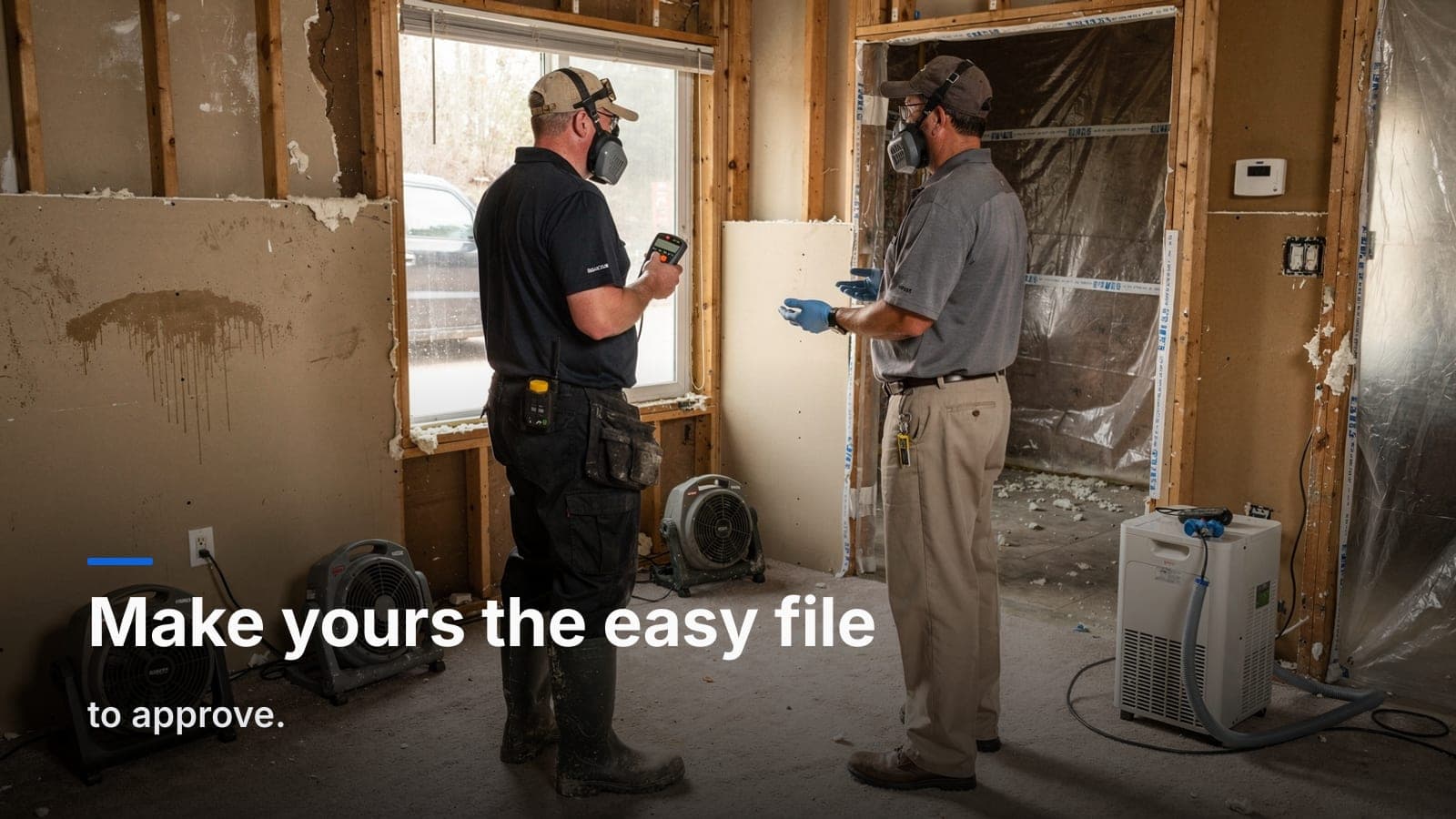
Whatever the category, the pattern is the same: capture the source, the contamination, the materials affected, and your reasoning, and tie all of it to the right rooms and the right claim. Months later, nobody remembers the job. The file is the job.
That's the part worth systematizing. When your category determination, moisture readings, photos, and work authorizations all live on the same job under the same claim number, carrier, and adjuster, you stop chasing paperwork and start defending scope with a few taps. That's exactly what the restoration and mitigation workflow in JobWorkflowPro is built to do, claim details, drying logs, e-signed authorizations, and threaded photos on every job, with QuickBooks sync so the AR side stays clean too.
Categorize honestly, scope to the category, and write down why. Do that consistently and your invoices stop being arguments.
Try it on your next loss
Frequently asked questions
What PPE is required for a Category 3 water loss?
Full PPE — respiratory protection, suits, gloves, and boot covers — is standard on Category 3 jobs and isn't optional, unlike the more situational gloves and eye/respiratory protection used on Category 2.
Are porous materials ever saved on a Category 3 water loss?
Generally no — porous materials like carpet, pad, affected drywall, and insulation that contacted black water are typically removed and disposed of rather than cleaned in place.
Does carpet always need to be removed after a gray water loss?
Not always — carpet pad usually comes out, but whether the carpet itself is salvageable depends on the specific contamination and how long the water sat before mitigation started.
How long can water sit before it's considered a higher category?
There's no fixed hour count — it depends on temperature and conditions — but dwell time and warmth push contamination upward, so document the date and condition you found on arrival, not just your arrival date.
How does water category affect what documentation an adjuster expects?
Higher categories raise the documentation bar — Category 1 mostly needs drying verification, Category 2 needs the reasoning behind removal calls, and Category 3 needs photographed proof of contamination and demo before you touch anything.
If you want to see how this looks when the category, drying logs, and photo documentation live on one job, start a free trial and run a real loss through it. Questions about whether it fits how your shop works? Reach out at sales@jobworkflowpro.com. No pressure, just a straight answer.