ACV vs. RCV and Depreciation: A Contents Tech's Guide
Quick answers
- What is ACV vs. RCV? Replacement Cost Value (RCV) is what it costs to buy the item new today; Actual Cash Value (ACV) is RCV minus depreciation for age and wear.
- What is depreciation on a contents claim? It's the dollar amount the carrier subtracts from an item's replacement cost to account for how old and used it was at the time of loss.
- How does recoverable depreciation work? On an RCV policy, the carrier pays ACV first, then releases the held-back depreciation once the customer actually replaces the item and submits receipts.
- Why does item detail matter? Age, condition, brand, and model drive the depreciation rate, so a vague inventory line gets depreciated harder than a documented one.
- Does the contents tech set depreciation? No. The carrier or their software applies depreciation, but your inventory and photos are what they depreciate against.
If you've done more than a handful of pack-outs, you've watched a customer's face drop when the first check comes in. They lost a five-year-old TV, a closet of clothes, a kitchen full of small appliances, and the payment looks like half of what they expected. That gap is depreciation, and the conversation that follows is one you'll have over and over. The better you understand ACV vs. RCV, the faster you can answer it honestly and the better your documentation protects the people whose stuff you're hauling out.
This isn't about turning you into an adjuster. It's about knowing what the carrier does with the inventory you hand them, so you build that inventory to hold up.
RCV, ACV, and the number in between
Start with the two values on every contents claim.
Replacement Cost Value (RCV) is the price to replace the item new, today, with one of like kind and quality. A four-year-old 55-inch TV doesn't get valued at what the customer paid in 2021. It gets valued at what a comparable 55-inch TV costs right now.
Actual Cash Value (ACV) is that replacement cost minus depreciation. Depreciation is the carrier's way of saying the item wasn't new when it was damaged, so they're not going to pay new-item money for a used item up front.
So the math on a single line looks like this:
RCV (replacement cost, new) − depreciation (age and wear) = ACV (what it was worth used)
The customer's policy decides which number they actually get paid, and when.
The two policy types that change everything
Whether depreciation ever comes back to the customer depends on the policy. You should know the difference because customers ask you, and "call your adjuster" is a weak answer when a simple explanation builds trust.
ACV policy. The customer gets actual cash value and that's it. Depreciation is gone. The TV that costs $600 to replace and had $240 in depreciation pays out $360, full stop. These policies are cheaper to carry, and the customer eats the gap.
RCV policy with recoverable depreciation. This is the common one on a decent homeowner's policy. The carrier pays ACV first, then holds back the depreciation. Once the customer actually replaces the item and shows proof, usually a receipt, the carrier releases the held-back amount. The customer ends up whole, but only if they jump through the replacement step. Plenty of people never claim the recoverable portion because nobody explained it to them.
That second type is why your inventory matters even after the first check. A clean, itemized list with condition and pricing makes the recovery step smooth. A sloppy one makes it a fight.
What drives the depreciation rate
Here's the part contents techs control. The carrier (or their estimating software) applies depreciation based on what they can see about each item. Feed them nothing and they'll assume the worst. Feed them specifics and the item gets valued fairly.
The main inputs:
- Age. Older items depreciate more. A documented purchase date or a rough age estimate beats a blank.
- Condition. An item in excellent shape before the loss depreciates less than one that was already worn. Your pre-loss condition notes and photos matter here.
- Category useful life. Electronics, upholstered furniture, clothing, and small appliances each depreciate on different schedules. A leather sofa and a laptop don't age the same.
- Brand and quality. A high-end appliance holds value differently than a builder-grade one. "Microwave" and "Viking microwave, stainless, over-range" are not the same line.
This is exactly why a thin inventory costs the customer money. If the line just says "appliance, kitchen," the carrier has no reason to apply a gentle depreciation rate. If your room-by-room inventory captures brand, model, approximate age, and condition, the item gets depreciated on its merits instead of a worst-case guess.
Why documentation is the whole game
A contents tech doesn't negotiate the depreciation percentage. But you build the record it's calculated from, and that record is leverage.
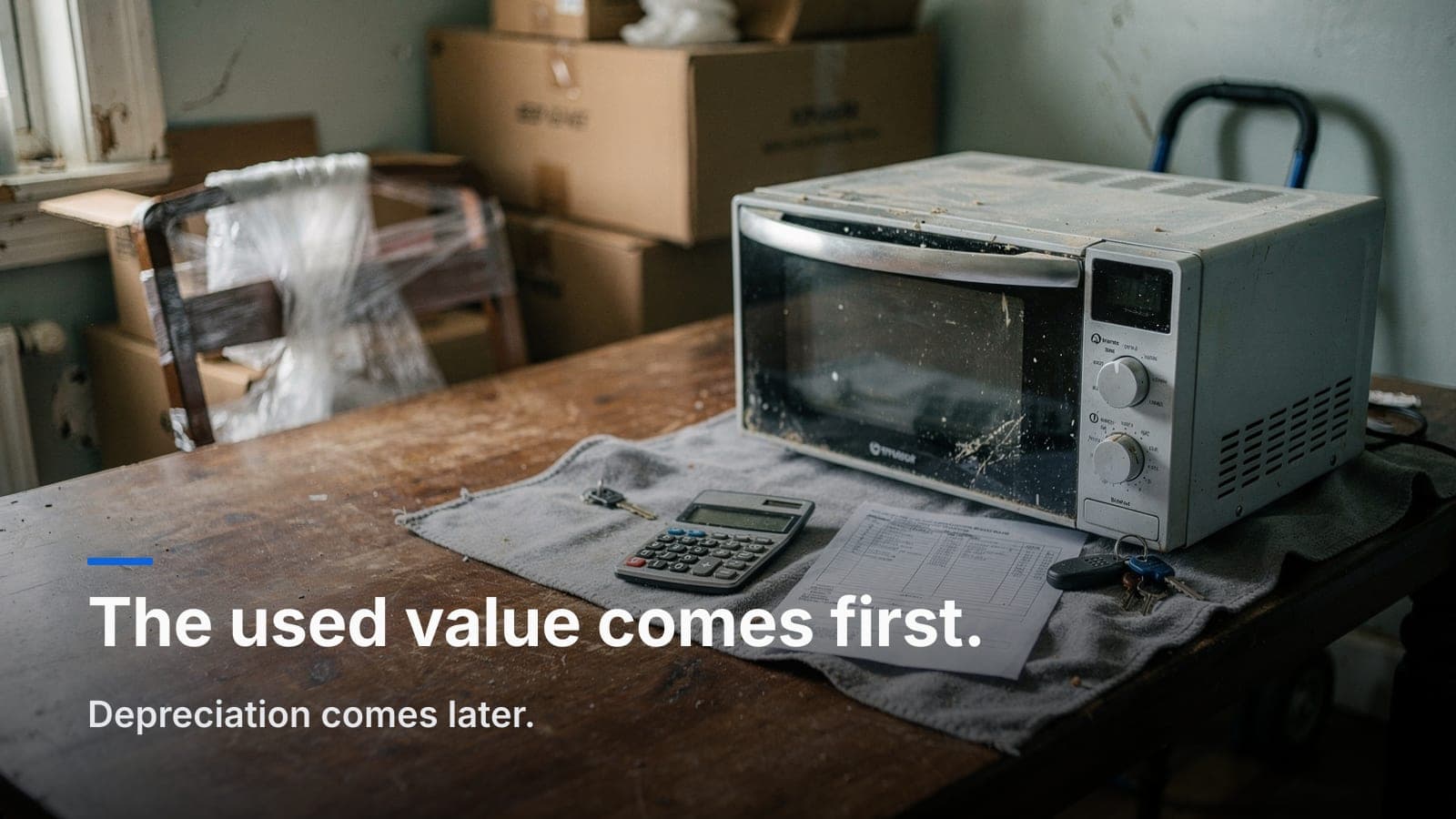
Think about a single damaged microwave on the packing blanket. If your line reads "microwave," the carrier has a generic kitchen item with no age, no brand, and a default depreciation schedule. If your line reads "GE Profile over-range microwave, stainless, approx. 3 years old, good condition, non-restorable due to soot penetration," you've just made a case. Same item, very different outcome when the numbers get run.
Photos do the same work. Clear, well-lit shots of the item, the label, and the damage give the adjuster something concrete instead of your word. We've written a full breakdown on photographing contents so the carrier doesn't push back — the short version is that documentation is what turns a disputed line into an approved one.
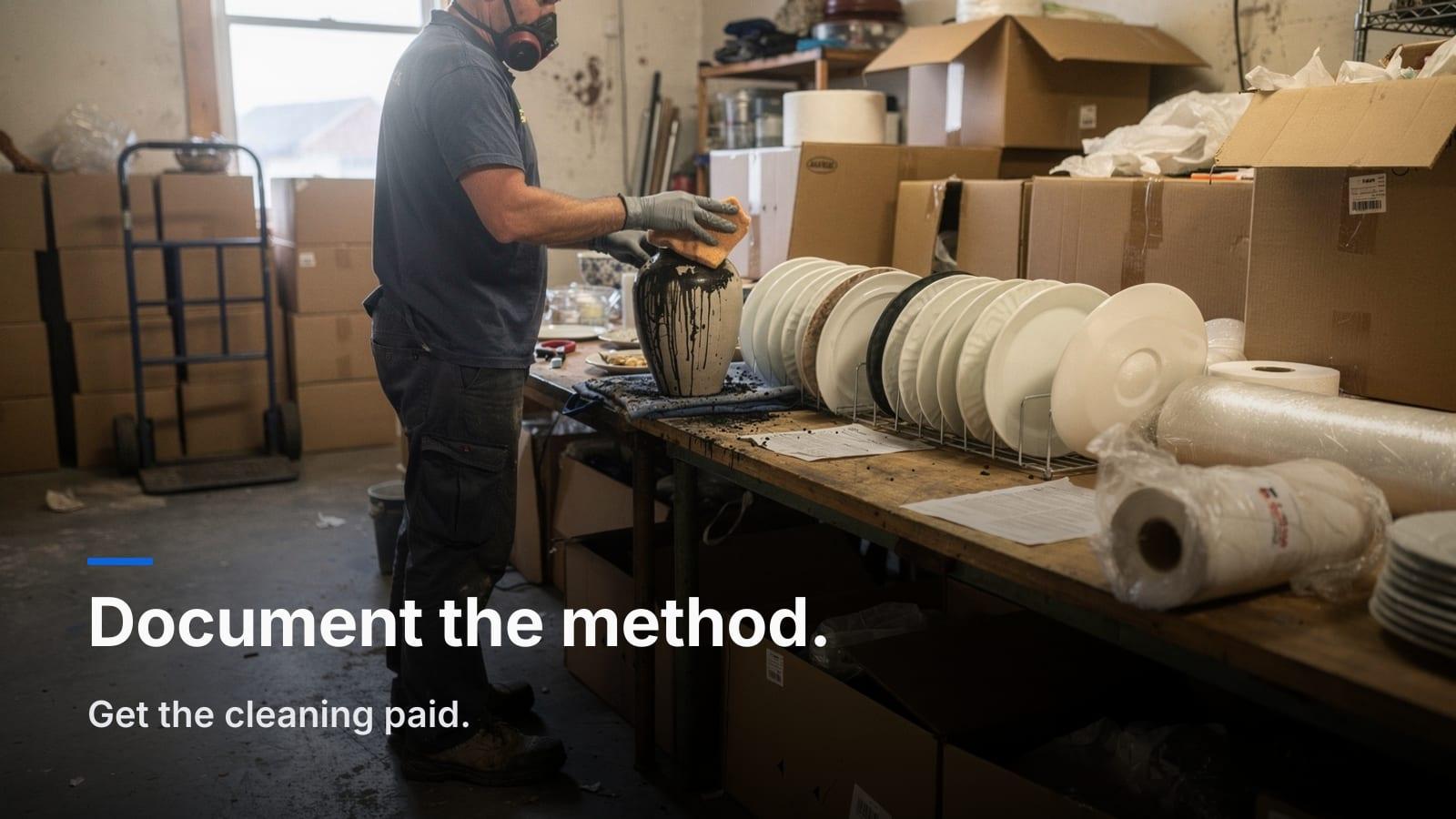
The same discipline matters when you're separating what cleans from what doesn't. The restorable vs. non-restorable call decides whether an item even goes on the loss list, and that call needs to be defensible too.
Pricing the line so ACV comes out right
Depreciation is a percentage applied to a replacement cost. If the replacement cost is wrong, ACV is wrong too — and usually wrong against the customer. So the starting number has to be solid.
This is where a lot of contents operations bleed time and money. Pricing hundreds of items by hand, one browser tab at a time, is slow and inconsistent. It's also where under-pricing creeps in, because a tired tech at hour six of a pack-out rounds down just to move on. Metered AI item pricing pulls a defensible replacement cost per line so the ACV calculation starts from a real number instead of a guess. Get the RCV right and the depreciation math lands where it should.
How to explain it to a customer without overpromising
Customers hear "insurance" and expect to be made whole on day one. Set the expectation early and you avoid the angry phone call later. A straight version sounds like this:
"The first payment is going to be the used value of your things, after depreciation for age and wear. If you have replacement cost coverage, the rest of the money comes once you actually buy the replacements and send in the receipts. Keep every receipt. That's how you get the full amount back."
You're not promising a number. You're explaining the process and telling them exactly what to do to recover the held-back depreciation. That's a tech who knows the job, and it costs you nothing but thirty seconds.
Where the software fits
None of this works on a legal pad. The link between a defensible inventory and a fair ACV is detail at the item level, and detail at scale needs a system. Our contents module is built around the room → box → item hierarchy so every belonging carries its own photos, condition, disposition, and price — the exact fields the carrier depreciates against. When the customer is ready to claim recoverable depreciation, the record is already clean and exportable instead of scattered across texts and camera rolls.
Frequently asked questions
Can a customer dispute the depreciation amount?
Yes. If the carrier applied a depreciation rate that doesn't match an item's real age or condition, the customer can push back with proof — receipts, documentation of good condition, or a model that holds value. A detailed inventory from the start makes that dispute winnable.
What happens to depreciation on non-recoverable items?
On an ACV policy, or on specific limited categories some policies carve out, depreciation is never released. The customer keeps the actual cash value and nothing more, so the replacement decision is theirs to fund.
Does moisture or smoke damage change the valuation?
It changes whether the item is restorable, not the depreciation schedule itself. If an item can be cleaned, it stays the customer's property and isn't paid as a loss. If it's non-restorable, it goes on the loss list and gets valued at RCV minus depreciation like any other total.
How long does a customer have to recover depreciation?
That's set by the policy, and it varies by carrier. There's usually a deadline measured in months after the ACV payment, so tell customers not to sit on it. Replace the items, keep receipts, and submit before the window closes.
If you're tired of thin inventories costing your customers money and costing you rework, give the contents tools a look. You can start a free trial and build a real item list on your next pack-out, or email us at sales@jobworkflowpro.com and we'll walk you through how other contents crews run it.