Drying Goals: When to Pull Equipment (and Prove It)
Quick answers
- What is a drying goal? A drying goal is the target moisture content you set for each wet material, based on a dry standard reading from an unaffected area of the same material.
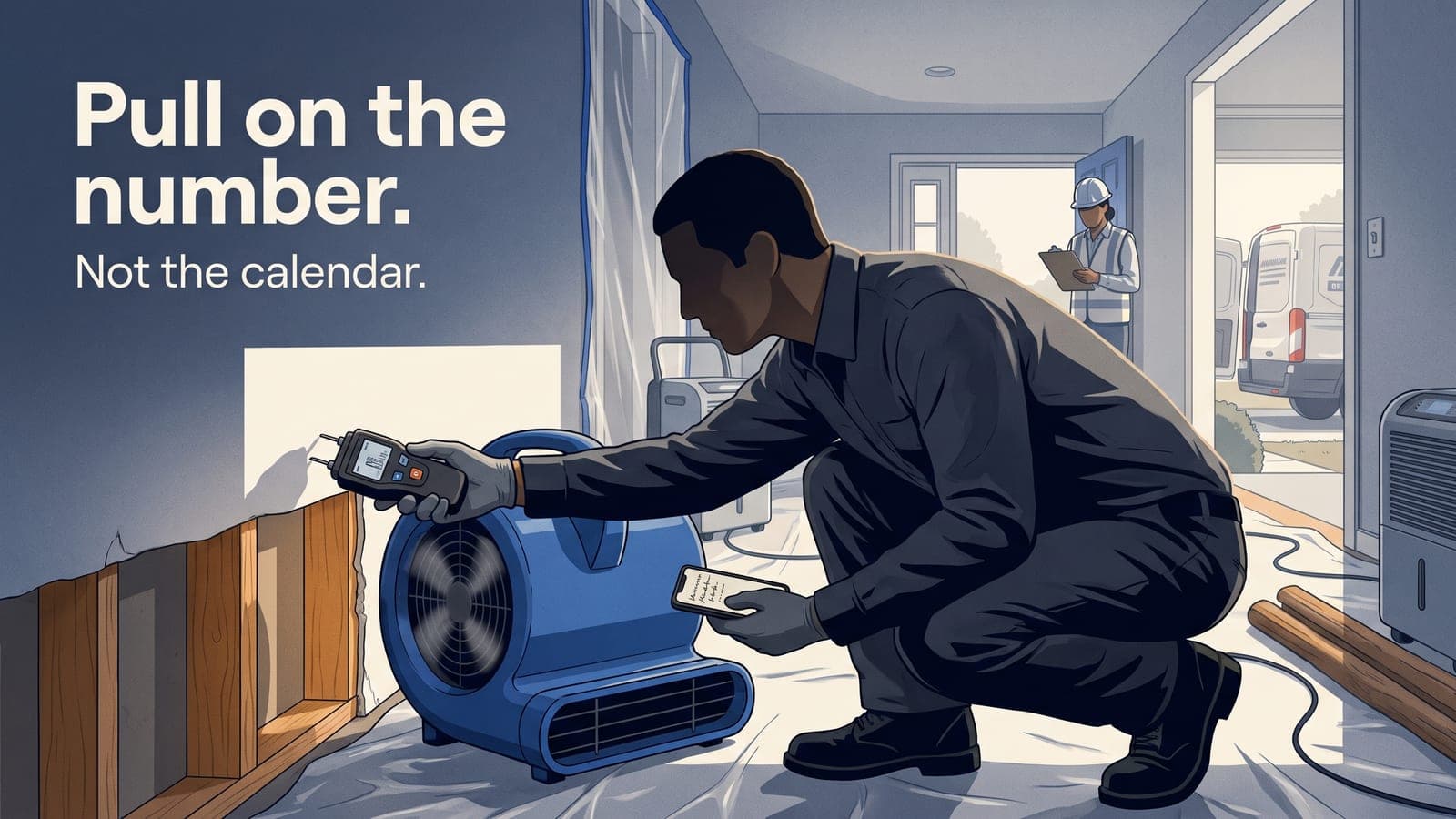
- When do you pull air movers? Pull equipment when affected materials have hit their drying goal and readings hold stable for a daily check, not when the calendar says day three.
- How do you set a dry standard? Take moisture readings on the same material in an unaffected room or area and use that as your baseline target.
- What proves the structure is dry? A daily moisture mapping log showing readings trending down to goal, plus temperature and humidity, tied to named material points.
- Why do adjusters push back on equipment? They question how long fans and dehus ran without documented drying progress, so undocumented days read as padding.
Every water tech has stood in a jobsite trying to decide whether to load out the air movers or leave them one more night. Pull too early and you get a callback, a mold complaint, or a homeowner who says the baseboard still feels damp. Leave them too long and the adjuster wants to know why you billed four days of equipment when the material was dry on day two. The answer to both problems is the same thing: real drying goals, documented daily, so the decision to pull is a number, not a feeling.
Drying goals are numbers, not days
Equipment doesn't come out because it's been three days. It comes out because the wet material reached its drying goal and held. That's the whole standard, and it's the one thing that turns a defensible file into an argument.
A drying goal is a target moisture content for a specific material. You don't invent it. You measure it. Find the same material somewhere the water didn't reach, take a reading, and that's your dry standard. Drywall in the unaffected hallway reads 12 percent, so your goal for the wet drywall in the bathroom is 12 percent, give or take. Framing behind the tub gets compared to framing that stayed dry. Hardwood to hardwood.
Set the goal at the start of the job, not the end. If you don't establish a dry standard on day one, you're guessing at the finish line the whole way through, and so is the adjuster reviewing your file later.
Why "three days and pull" gets you in trouble
The three-day rule of thumb exists because a lot of standard losses do dry in that window with the right equipment. But it's a planning estimate, not a pull criterion. Dense hardwood, wet plaster, a wall cavity you couldn't get airflow into, or a Category situation that changed your scope will all blow past three days. Meanwhile a small Cat 1 loss on an open floor might be done in 36 hours.
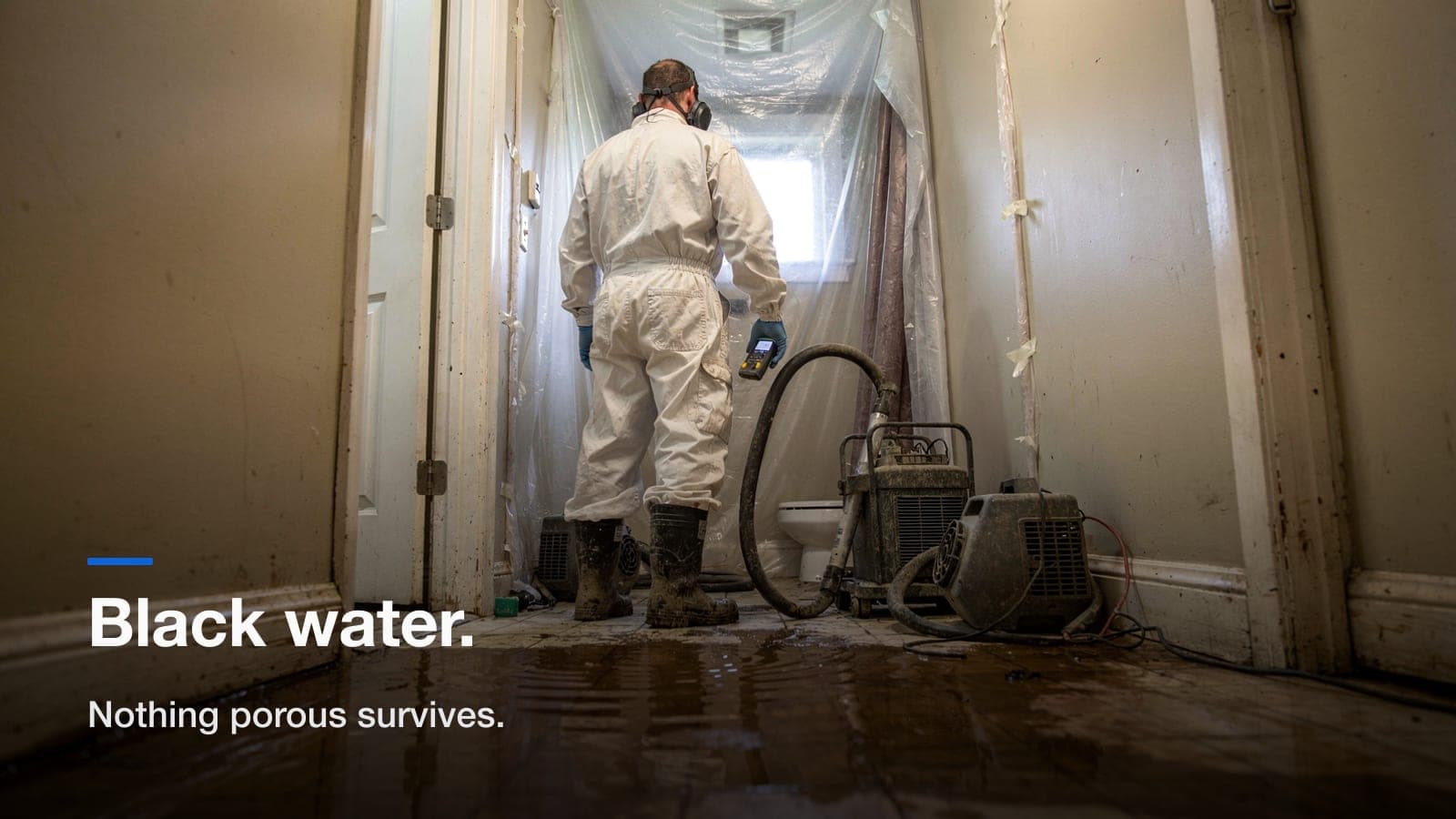
If you're not sure how the category itself changes drying time and scope, that's a separate call worth getting right up front. Water damage categories 1, 2, and 3 each change your scope in ways that affect what you're even trying to dry.
Moisture mapping is what proves the goal
Setting a goal is half of it. Proving you hit it is the other half, and that's where moisture mapping equipment and a clean drying log carry the file.
Map the affected area on day one: mark your wet points, label them so you can find the exact same spot tomorrow, and record the reading. A moisture map isn't a pretty diagram for the file, it's a set of fixed measurement points you return to every single day. If you can't take the reading in the same place twice, your trend line is noise.
Keep three things moving on every visit:
- Material moisture readings at your mapped points, compared to the drying goal for that material.
- Ambient conditions — temperature and relative humidity at the affected area and, ideally, at the dehumidifier intake and outlet so you can show the equipment is actually pulling water.
- Equipment on site — how many air movers, what dehus, and any changes, so the billed equipment matches what the log shows working.
That daily record is your drying log. It's the document that answers "why did the fans run this long" before the adjuster even asks. Done right, moisture mapping and drying logs back up your scope instead of leaving you defending it from memory.
The reading has to hold, not just touch the number
One reading at goal isn't a pull signal. Materials release moisture unevenly, and a surface can read dry while the core is still wet, especially with dense or layered assemblies. Confirm the goal holds on a stable check, and pay attention to whether the material's temperature and the ambient RH still make sense. If your hardwood hit 9 percent this afternoon but the slab under it is still giving up water, you're not done.
This is the judgment part, and it's where an experienced tech earns the call. But even judgment has to leave a paper trail. Note in the log why you're leaving equipment despite a reading at goal, or why you pulled with one point slightly high because it was the last isolated spot and airflow was solved.
Making the pull call
Here's the working checklist for when to pull air movers and dehus:
- Every mapped point is at or below its drying goal. Not most. Every affected material has hit its dry standard.
- Readings held on the daily check. No overnight rebound, no core moisture bleeding back to the surface.
- Ambient conditions support it. RH is under control and the dehu isn't still working hard to keep it there.
- The log tells the story cleanly. Anyone reading the file can see the downward trend from wet to goal, point by point.
When all four line up, load out and note the pull date and final readings. When they don't, leave the equipment and write down why. Both are defensible. What's not defensible is pulling with no final readings, or billing days the log doesn't explain.
Pull in stages when it makes sense
You rarely need every fan running until the last hour. As zones hit goal, pull equipment from those rooms and consolidate on the slow spots. Staged demob does two things: it lowers the customer's equipment bill honestly, and it shows the adjuster you're managing the drying instead of parking a warehouse of fans and walking away. Update the log each time you move or remove equipment so the billed count always matches reality.
The documentation is the deliverable
The drying is the work. The documentation is what you actually deliver to the carrier, and it's what gets a water mitigation scope approved the first time instead of kicked back for questions. A file with a dry standard, mapped points, a daily trend to goal, and matching equipment counts doesn't invite pushback. It closes the conversation.
Doing that on paper or in a photo dump is where it falls apart. Readings get logged on a clipboard that never makes it into the file, equipment counts drift, and the moisture map lives in one tech's head. Keeping the map, the daily readings, the photos, and the equipment log on one job record, in the field, on the phone in the tech's hand, is the difference between a file you can hand over and one you have to reconstruct. That's the workflow the restoration and mitigation package is built around: claim details, moisture mapping, drying logs, and e-signed authorizations on the same job everyone's already looking at.
Frequently asked questions
What moisture meter should I use for drying goals?
Use a pin meter for a quantitative reading of material moisture content and a non-invasive meter for scanning and locating moisture behind surfaces. You need the actual percentage to compare against a dry standard, so the pin reading is what goes in the log as your goal-tracking number.
Do I need a dry standard for every material?
For every distinct affected material, yes. Drywall, framing, hardwood, and subfloor all dry to different targets, so a single blanket number won't hold up. Take one dry-standard reading per material type from an unaffected area.
What if the customer wants the equipment gone before it's dry?
Document the request and your readings, explain the mold and secondary-damage risk in writing, and get their decision on record. If they insist, note the incomplete drying and final readings in the log so the file reflects that the pull was the customer's call, not yours.
How often should I document during drying?
Daily, at minimum, with a reading at every mapped point plus ambient conditions and equipment on site. Skipped days are the gaps adjusters focus on, so a consistent daily record is worth more than an occasional detailed one.
Setting real drying goals and logging them takes discipline, but it's the cheapest insurance you have against callbacks and denied equipment charges. If you want the moisture map, drying log, and equipment count living on one job your whole crew can see, start a free trial or email us at sales@jobworkflowpro.com and we'll walk you through how restoration crews run it.