5 Contents Pack-Out Mistakes That Quietly Cost You Money
Quick answers
- What is the most common contents pack-out mistake? Sealing boxes without labeling them at the point of packing, which breaks your inventory and chain of custody before the truck even leaves.
- How do pack-out errors cost money? Unlabeled or undocumented items get denied, lost, or disputed, so you eat the replacement cost or write off hours of labor you can't bill back.
- Can you fix a sloppy pack-out after the fact? Partly, but reconstructing an inventory from memory invites carrier pushback and never fully recovers what you failed to photograph on day one.
- What's the best way to prevent pack-out mistakes? Pack, label, photograph, and price every item in one pass using a room-to-box-to-item workflow instead of catching up at the warehouse.
A contents pack-out looks simple from the outside. You show up, you box stuff, you haul it to the warehouse. But the money doesn't leak where you'd expect. It leaks in the quiet gaps between packing a box and billing for it, and most of those gaps open on the loss site while everyone's moving fast and the light's going.
I've run enough pack-outs to know the difference between a job that pays and a job that bleeds usually comes down to five habits. None of them are dramatic. All of them are fixable. Here are the contents pack-out mistakes that quietly cost you money, and how to stop them.
1. Sealing boxes before you've labeled and logged them
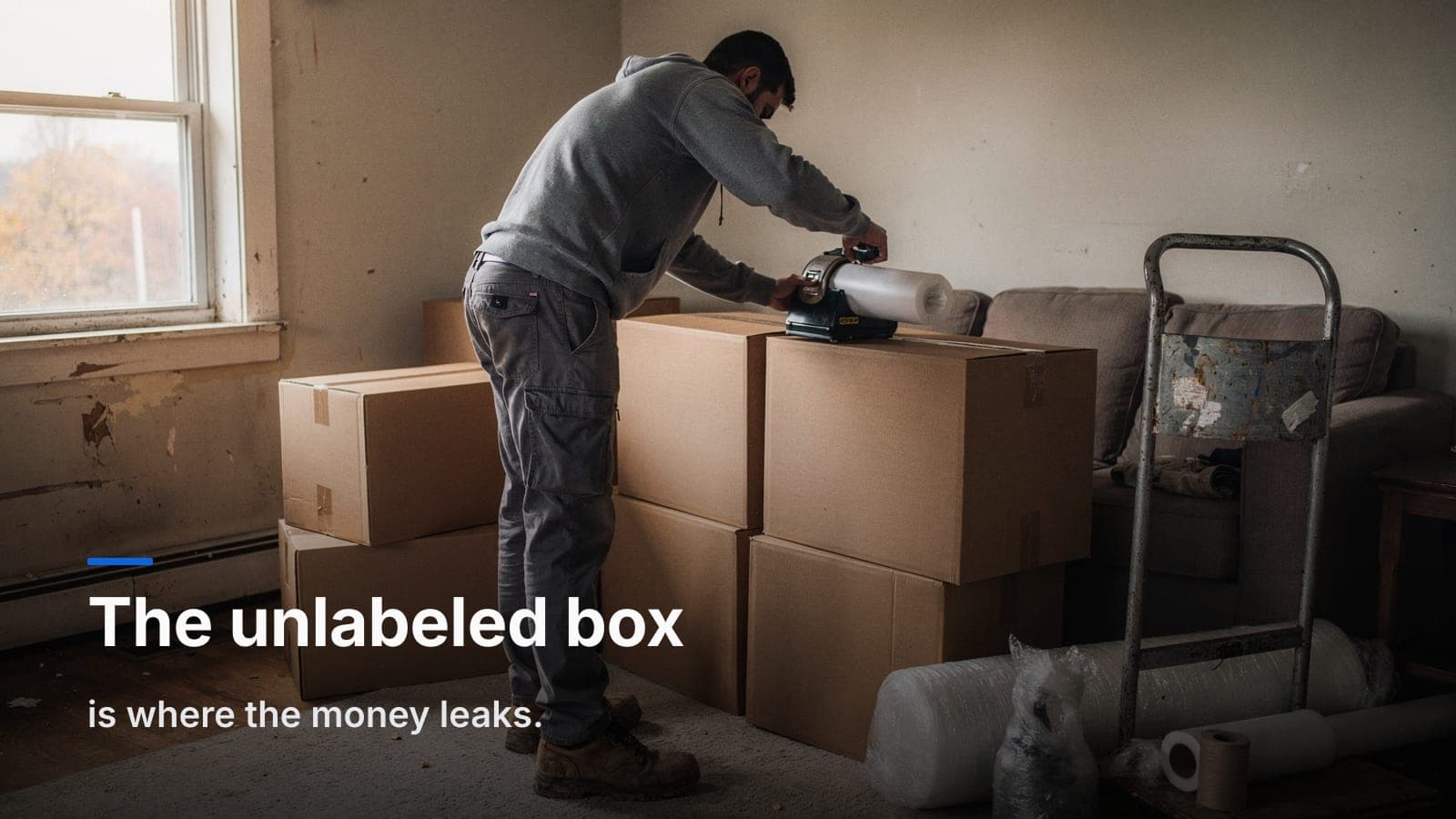
This is the one that starts the whole mess. A tech tapes up a carton in the living room, stacks it with four others, and figures he'll label them at the truck. Then another room's going, the homeowner's asking questions, and by the time anyone circles back, nobody's sure what's in box 12 versus box 15.
Once a box is sealed and unlabeled, you've got two bad options: cut it open again and lose the time, or guess. Guessing is how you end up with a "miscellaneous household" line the adjuster strikes right off the estimate.
The fix is to never let a box leave its room without a number tied to a room and an item list. Label at the point of packing, not at the dock. If you're working off paper, that's a hard discipline. If you're working off a room-to-box-to-item inventory on a phone, the structure forces it — a box can't exist in the system without a room, and items can't exist without a box. Our field tech's inventory checklist walks the same sequence step by step.
2. Photographing the room instead of the items
Everybody takes photos on a pack-out. Fewer people take the right photos. A wide shot of a cluttered bedroom proves the room was full. It does not prove the condition of the leather recliner, the water line on the dresser, or the crack that was already in the TV before you touched it.
When the carrier questions an item, a room photo helps you nothing. You need the individual shot — the item, its condition, and the damage or pre-existing wear, close enough to read. This is what separates a paid claim from a fight. There's a right way to do it that keeps the adjuster off your back; we covered it in how to photograph contents so the carrier doesn't push back.
The cost here is subtle. You don't notice it on the job. You notice it six weeks later when the desk adjuster disputes three high-value items and you've got nothing to stand on. Those denials come straight out of your check or the customer's settlement, and either way you look bad.
3. Putting off item descriptions and pricing until "later"
Later never comes cheap. The tech who skips descriptions on site is handing a pile of unlabeled photos to whoever does the billing, and that person now has to reconstruct what each thing was, what condition it was in, and what it's worth. That's hours of office labor you can't bill, multiplied across every job.
Worse, the longer the gap between packing and pricing, the fuzzier the memory and the weaker the documentation. Detail you could have captured in two seconds on site becomes an afternoon of detective work at a desk.
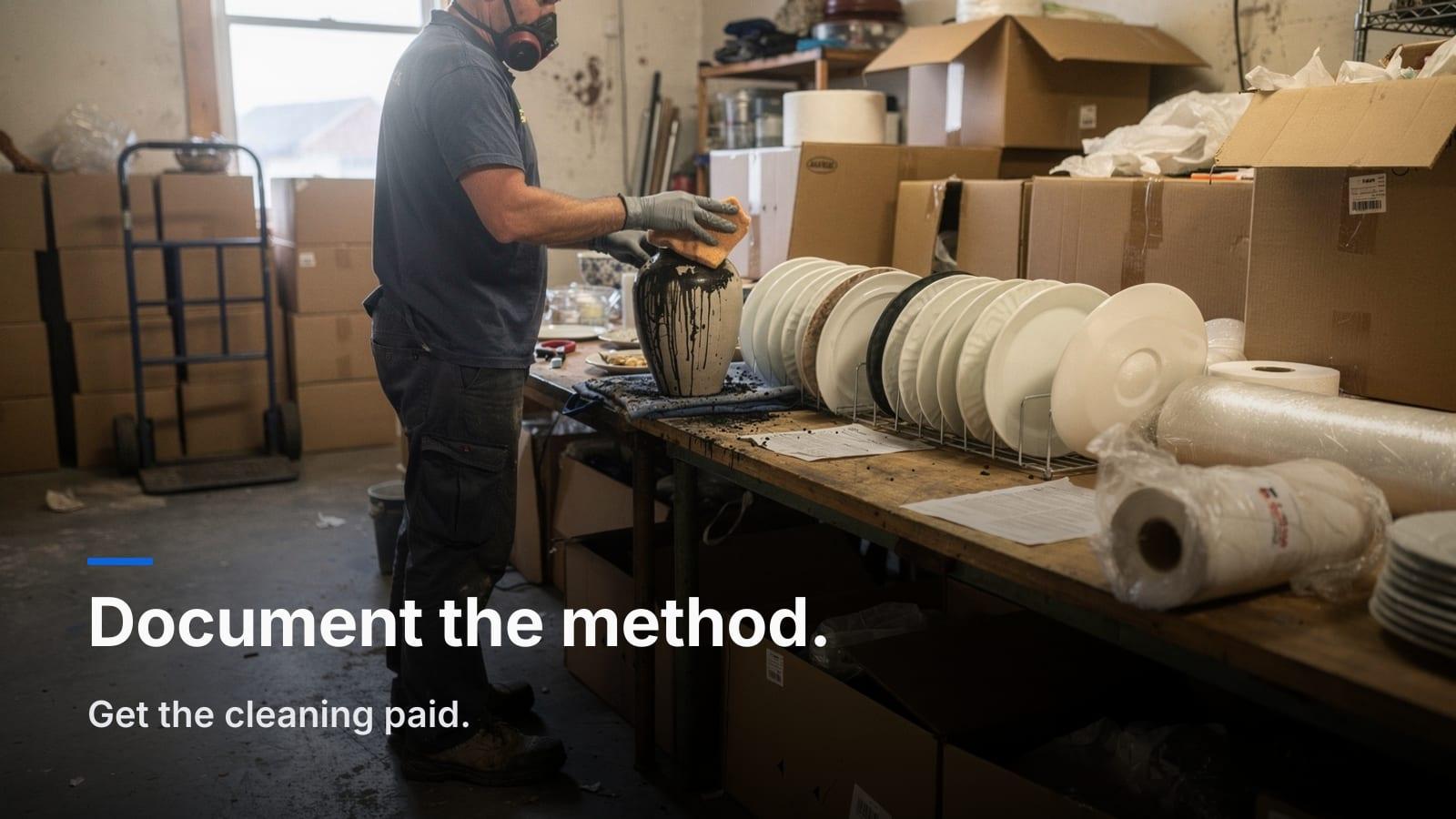
This is exactly the kind of busywork that software should eat. On the contents side we lean hard on automation for this — auto-naming, descriptions, and metered AI item pricing that turns a day of line-item valuation into minutes. The point isn't the tech for its own sake. The point is that the item gets named, described, and priced while it's still in your hands, so nothing gets reconstructed from a blurry photo later.
4. Breaking the chain of custody once it's in the warehouse
A pack-out doesn't end when the truck's unloaded. Those belongings are now in your care, custody, and control, sometimes for months. If a box goes to cleaning, comes back, gets re-shelved somewhere else, and nobody logged the move, you've got a hole in your chain of custody.
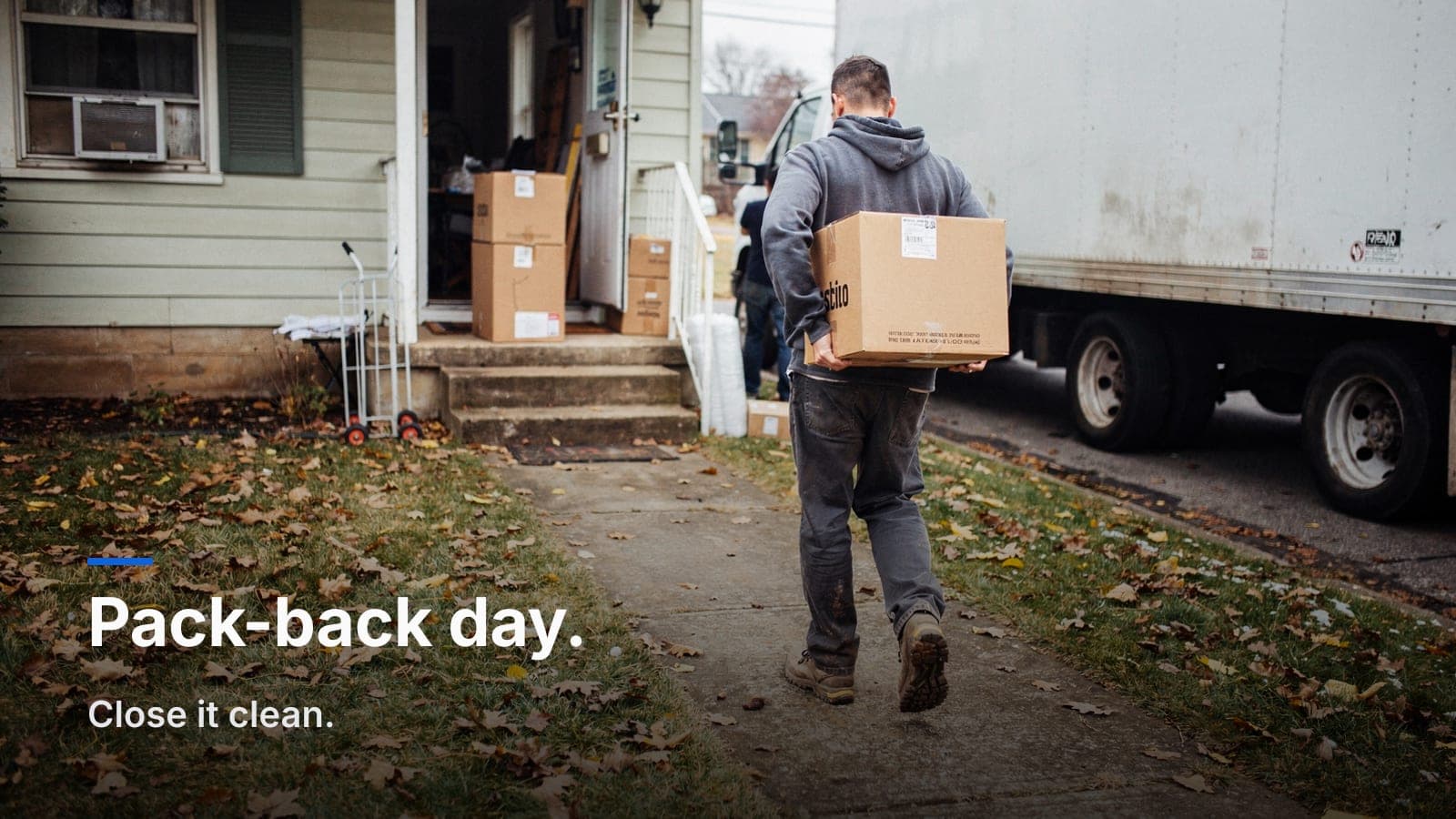
Here's where it bites: the customer calls asking for their kid's baby photos out of storage, or the claim wraps and you're prepping the delivery back-out, and you can't locate three boxes. Now you're paying techs to search a warehouse, and if you can't produce an item, you're buying it. Contents loss out of your own pocket is one of the least visible ways a pack-out goes upside down, because it never shows up as a line on the job — it shows up as shrinkage.
Every location change should be a logged event tied to the box and the job. A defensible contents storage workflow means you can answer "where is it" instantly instead of sending someone to walk the aisles.
5. Packing out when you should have cleaned in place
The last one isn't a documentation mistake. It's a judgment mistake, and it's the most expensive of all.
Not every loss needs a full pack-out. Moving everything to the warehouse racks up transport, storage, cleaning, and back-out — real cost that the carrier scrutinizes hard. If a clean-in-place would have gotten the structure dry and the contents handled on site, a pack-out you can't justify is one the adjuster will trim, and the trimmed portion is margin you already spent.
The flip side is just as true: clean in place when you should have packed out, and you're working around wet materials, slowing the drying, and risking secondary damage to the belongings. Make the call deliberately and document why. We broke down the decision in pack-out vs. clean-in-place, and it's worth running through before you commit a crew.
The thread running through all five
Notice what connects every one of these. The cost is always deferred and always invisible at the moment it's created. The tech who skips the label, the room photo, the description, the location log — he's not being lazy, he's being fast, and the job feels fine when the truck pulls out. The bill comes due weeks later as a denial, a lost box, or a trimmed estimate, long after anyone connects it to the shortcut.
That's why pack-out best practices live in the workflow, not in a reminder email. If the system makes you label the box, tie it to a room, photograph the item, and log the move — because it literally won't let you skip ahead — the mistakes don't happen. That's the whole idea behind the contents module: the discipline is built into how the work gets recorded, not bolted on after.
Frequently asked questions
How long should I keep contents in storage after a claim closes?
Hold until you have written confirmation the claim is settled and the customer has accepted delivery or disposition. Releasing or disposing of items early, even when it seems obvious, exposes you if the claim reopens or the customer disputes what happened to something.
Who's liable if a customer's item is damaged during the pack-out?
Once you take care, custody, and control, you generally are, which is exactly why condition photos at the point of packing matter so much. Documenting pre-existing damage on site is your defense against being blamed for wear that was already there.
Do I need customer approval before disposing of non-restorable items?
Yes. Get a documented disposition approval before anything goes to the dumpster, with the item identified and photographed. Tossing a non-restorable without sign-off turns a routine call into a complaint, regardless of how clearly totaled the item was.
How many people should run a contents pack-out?
It depends on the size of the loss, but the bigger lever is that whoever's packing is also documenting in real time. One tech working a disciplined room-to-box-to-item flow often produces cleaner records than a larger crew packing fast and labeling later.
If your pack-outs are leaking money in any of these spots, the fix usually isn't working harder on site — it's a workflow that won't let the shortcuts happen. That's what we built the contents side of Job Workflow PRO to do. Start a free trial and run your next job through it, or email sales@jobworkflowpro.com if you want to talk through how it'd fit your crew.