Building a Defensible Contents Valuation Without Guessing
Quick answers
- What is a defensible contents valuation? It's a replacement price on a non-restorable item backed by a like-kind-and-quality comparable, photos, and age/condition notes, so an adjuster can verify it without guessing.
- What does "like kind and quality" mean? It means the comparable you price against matches the lost item's type, features, size, and grade — not the cheapest thing that shares the name.
- Why do adjusters push back on contents pricing? Usually because the price has no source, the comparable is a tier above or below the original, or there's no proof of the item's age and condition.
- Do I price replacement cost or actual cash value? You document replacement cost with a comparable; the carrier applies depreciation to reach ACV based on the age and condition you record.
- When should I push back on a contents valuation? When the adjuster's number ignores the item's real grade, features, or a documented comparable you can show on the record.
If you've ever had a contents list kicked back with "pricing needs support," you already know the fight isn't about whether the TV was ruined. It's about whether you can prove what it would cost to put the customer back where they were. A valuation the adjuster can't verify is a valuation the adjuster won't pay. The good news is that a defensible number isn't hard — it just has to be built on something other than your memory and a round figure.
This is about the non-restorable pile: the items you've already made the call on and are now replacing rather than cleaning. If you're still deciding what cleans and what doesn't, that's a separate conversation — see restorable vs. non-restorable contents. Here we're assuming the disposition is "replace," and the question is: what's the number, and how do you back it?
Three things every priced line needs
Strip away the software and the process, and a defensible line item comes down to three things an adjuster can check:
- What the item actually was — type, brand, model or grade, size, key features.
- Its age and condition at the time of loss — so depreciation lands fairly.
- A like-kind-and-quality comparable — a real, current replacement at the same tier, with the source captured.
Miss any one of those and you've handed the desk a reason to discount or stall. Nail all three on every line and you've removed the guesswork from both sides of the table.
Capture the item before it leaves the room
The worst time to describe an item is after it's in a box under forty other boxes. The best time is while you're standing in front of it, before pack-out or before it goes to the dumpster.
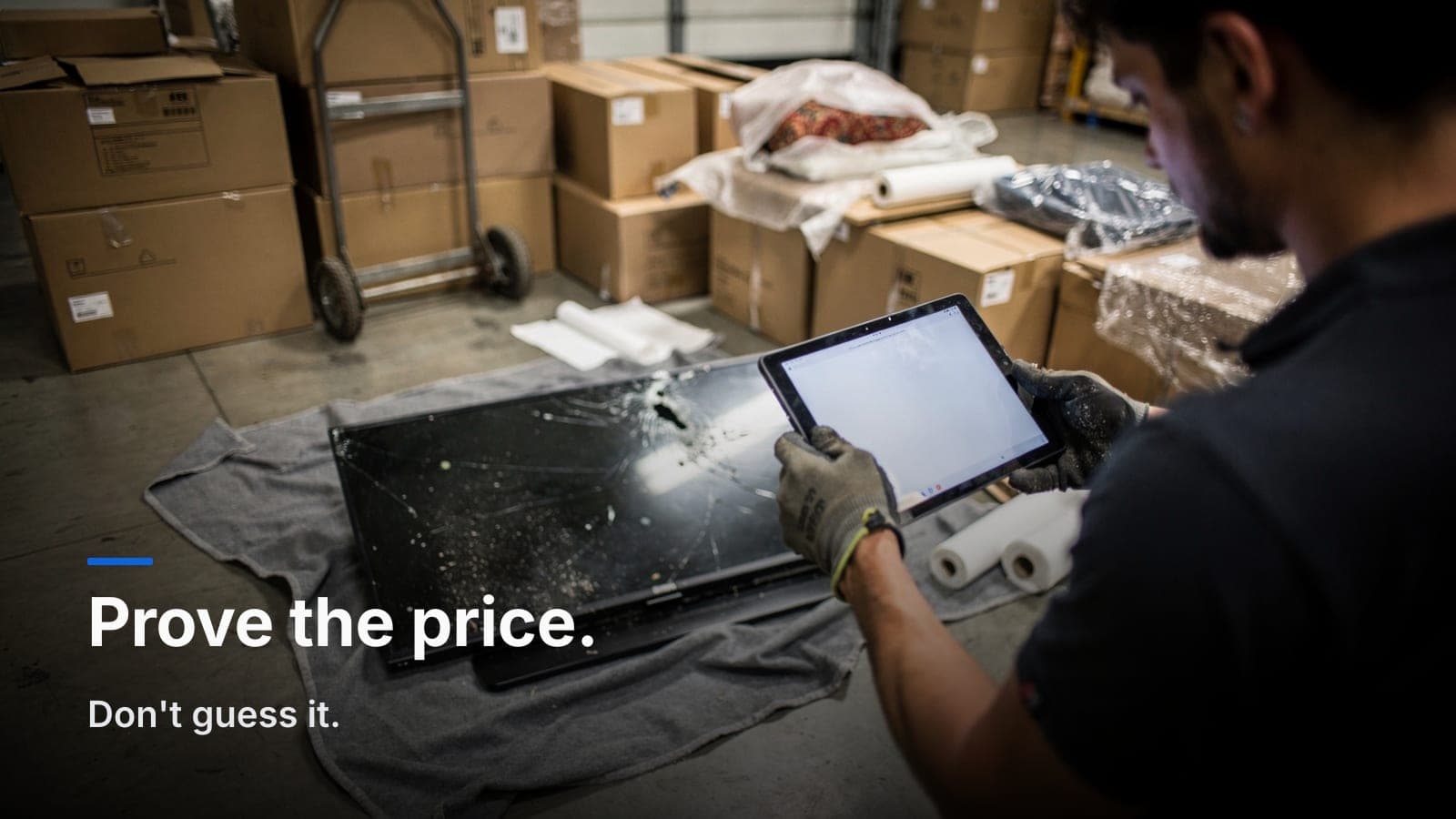
Photograph the make and model plate — on a TV it's on the back, on appliances it's inside a door or on the frame. When that plate is soot-covered, warped, or waterlogged and unreadable, say so in the note and shoot what you can: the screen size, the port layout, the stand, anything that establishes the tier. "55-inch 4K smart TV, serial plate illegible from heat" is a usable note. A line that just says "TV — $600" is not.
Shoot the item's condition honestly too. Scratches, wear, prior damage — none of that disqualifies the claim, and documenting it keeps you credible. For the full rundown on shots that survive review, how to photograph contents so the carrier doesn't push back walks through it. If you want the item-level discipline baked into your workflow, the room-by-room contents inventory checklist covers the fields to grab while you're on site.
Age and condition drive the ACV
Replacement cost is the comparable. Actual cash value is what the carrier pays after depreciation, and depreciation is a function of age and condition. If you don't record those, the adjuster estimates them — and their estimate is rarely generous to your customer. "Purchased approximately 2019, good working condition before loss" does more for the payout than any amount of arguing after the fact. Ask the homeowner; they usually remember the big-ticket items within a year or two.
Build the like-kind-and-quality comparable
This is where most contents pricing falls apart. "Like kind and quality" is a specific standard, and it cuts both ways.
A like-kind-and-quality comparable matches the tier and features of what was lost — not the name. A lost recliner isn't replaced by the cheapest recliner that comes up first; it's replaced by one with the same mechanism, material, and size class. A mid-grade stand mixer isn't matched to the commercial model, and it isn't matched to the bargain knockoff either. You're pricing the equivalent, not the best case and not the floor.
A clean comparable captures:
- The replacement item — product name and enough detail to show it matches the tier.
- The source — a current, mainstream retailer, not a liquidation or auction listing.
- The price and the date you pulled it.
Capture the source on the line. When the adjuster can click through to the same item at the same tier, the conversation is over before it starts. When they can only see your number, they have to take it on faith — and desks don't pay on faith.
A note on where you pull prices: stick to real retail you could actually buy from today. One-off marketplace listings and closeout prices invite exactly the pushback you're trying to avoid, because the adjuster can argue the item isn't reliably available at that number. Mainstream, in-stock, current. That's the standard.
Discontinued and one-of-a-kind items
Not everything has a clean match. When the model is discontinued, price the nearest current equivalent at the same tier and note that it's a substitute for a discontinued item. For genuinely unique pieces — custom furniture, specialty gear, collectibles — document what you can about what it would cost to replace with something comparable, and flag early that it'll need its own conversation. Don't bury a $4,000 outlier in a list of kitchen gadgets and hope it rides through. It won't.
Where software earns its keep
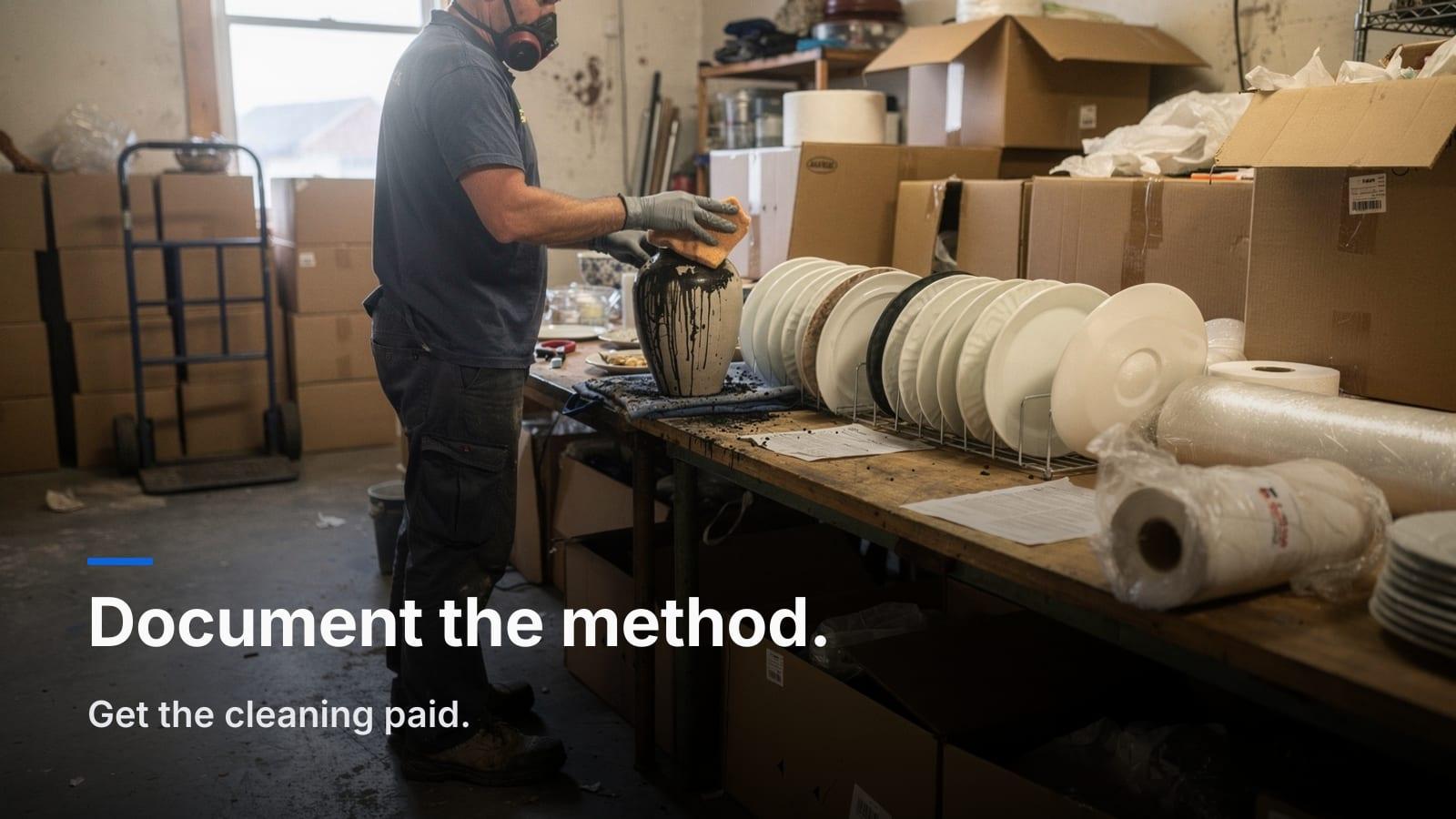
You can do all of this with a camera and a spreadsheet. It just doesn't scale past a small loss, and the detail degrades fast when you're moving a whole house. The point of running contents in a real system is that the photo, the condition note, the age, the comparable, and the price all live on the same item record — so when pricing gets questioned, the support is already attached. Nothing to reassemble, nothing lost between the field tech's phone and the office.
That same item-level discipline is what lets automation help rather than hurt: our contents tools handle the auto-naming and descriptions and can meter AI pricing on belongings (covered in depth in AI item pricing for contents claims). But automation only pays off when the underlying record is built right. Garbage photos and blank condition fields in, garbage valuation out.
When to push back — and how
A defensible valuation isn't just defense. It's also what lets you push back when the adjuster's number is wrong.
Push back when:
- The comparable is the wrong tier. If the desk priced a mid-grade item against a bottom-shelf substitute, show your like-kind-and-quality comparable on the record and ask them to match the grade.
- Depreciation ignores documented condition. If you noted "good working condition, three years old" and the ACV reflects a ten-year-old beater, point to the note.
- Features got dropped. A 65-inch TV priced as a 50-inch, a leather sofa priced as fabric — these are correctable with the photo you already took.
How you push back matters as much as whether you do. Don't argue the number in the abstract. Point to the attached proof, line by line, and let the documentation carry the argument. Adjusters move faster when you've made their job of verifying easy instead of making them defend a position. The same communication habits that speed scope approvals apply here — working with adjusters covers the tone and cadence that gets approvals moving.
What you don't do is inflate everything hoping the desk negotiates you down to fair. That burns your credibility on the whole list, and once an adjuster decides your pricing runs high, every line gets scrutinized. Price it right, support it fully, and your pushback actually means something when you use it.
The payoff
A contents list where every non-restorable line carries its item details, age, condition, photo, and a sourced comparable isn't just easier to approve. It's faster to invoice, cleaner on an audit, and it keeps your customer from eating the gap between what you charged and what the carrier paid. The time you spend building the record on site is time you don't spend fighting over it three weeks later.
Frequently asked questions
How do I handle sales tax in a contents replacement price?
Price the comparable at the pre-tax retail figure and let the carrier's settlement handle applicable tax per the policy and state rules. Document the retail price cleanly so there's no confusion about whether tax is baked in.
What if the homeowner can't remember when they bought something?
Estimate conservatively and note it as an estimate — "approx. 2018, per homeowner." A reasonable, flagged estimate is defensible; a precise date you made up is not. For high-value items, ask if they have a receipt, a credit card record, or a photo with a timestamp.
Should I price items the homeowner wants to keep and clean themselves?
If an item is going back to the customer as-is or cleaned in place, it's not a replacement line — don't price it as non-restorable. See pack-out vs. clean-in-place for drawing that line before it muddies your list.
Does a sourced comparable guarantee the adjuster pays that exact number?
No — the carrier still applies depreciation to reach actual cash value, and policy limits apply. What the comparable guarantees is that the replacement cost starting point is verifiable, which keeps the negotiation anchored to reality instead of a guess.
Give your contents pricing a backbone
If your valuations are living in your head and a spreadsheet, you're doing more arguing than you need to. Building the item record — photo, condition, age, and a sourced comparable on every line — is what turns "pricing needs support" into "approved." Start a free trial and run your next pack-out with the documentation attached from the field, or reach out at sales@jobworkflowpro.com if you want to talk through how your contents workflow maps to it.